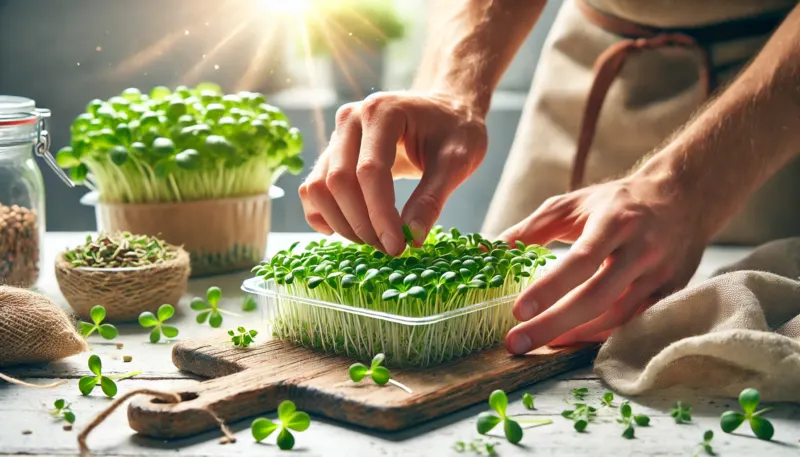
Microgreens are young, tender plants with a lot of water in their tissues, so they spoil quickly. Stored properly, though, they keep for several days, and with a few simple hygiene rules they are as safe to eat raw as any salad leaf.
How long they keep
Cut microgreens usually keep for a few days in the fridge. In commercial modified-atmosphere packaging at 5 °C, studies have shown a shelf life of about 10 days, and longer with specialised packaging films. At home, allow about 5 to 7 days for sturdier varieties such as pea and sunflower, and less for delicate ones such as basil and coriander.
Microgreens bought live, still in their growing medium, last longer: you cut only what you need each time.
How to store them
- Dry. Moisture on the leaves is their biggest enemy. If you grow your own, avoid watering for the last 12 hours before cutting.
- Unwashed. Wash them just before eating, not before they go in the fridge.
- In a container with kitchen paper. Put a sheet of kitchen paper in the bottom of a lidded container, lay the microgreens in loosely without packing them down, and close the lid.
- In the fridge, at 4 °C or below. That is the limit the FDA recommends for fresh, perishable produce. A fridge thermometer costs very little and shows whether your fridge really holds that temperature.
- Away from raw meat and other foods that will be cooked, so germs are not transferred to something that will be eaten raw.
How to wash them
Rinse microgreens gently under running water in a colander, then pat them dry with kitchen paper or use a salad spinner. Do not use soap, detergent or "produce wash": the FDA does not recommend them. Washing reduces bacteria but does not eliminate them, which is why hygiene while growing and proper chilling matter just as much.
When to throw them out
- When they feel slimy or mushy.
- When they smell bad or sour.
- When they have darkened, yellowed or wilted badly.
- When you see mould, meaning grey or black fuzz, or when mouldy patches are not limited to a leaf or two.
If in doubt, throw them out. They are a cheap food and not worth the risk.
Can you freeze them?
Yes, but they lose their crunch, because the water in their tissues freezes and breaks the cells. Frozen microgreens are only suitable for smoothies, soups and cooked dishes, not for salads or garnish.
Safety when growing at home
The organisms researchers worry about most are Salmonella, E. coli and Listeria. Scientific reviews name contaminated seed, irrigation water, the growing medium and hands as the main sources of contamination. A few simple rules greatly reduce the risk:
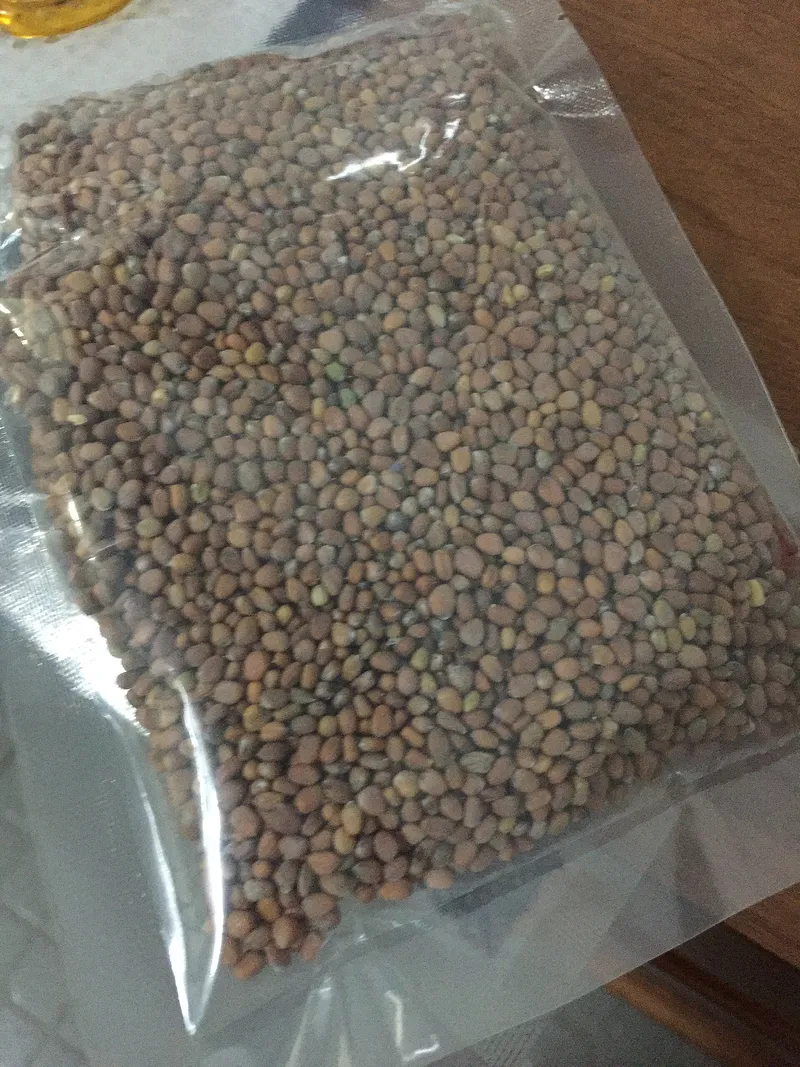
- Clean seed from a reputable supplier, sold specifically for sprouting or microgreens and not chemically treated.
- Drinking water for watering, not water from a rain barrel or tank.
- Clean trays. Wash them in hot soapy water and rinse well before every sowing.
- Clean hands and scissors at harvest time.
- Watering from below, so the leaves you will eat stay dry.
- No nightshades: tomato, pepper, aubergine and potato are not edible as microgreens.
Studies also show that E. coli multiplies more in hydroponic systems, where water circulates continuously, than in a peat-based medium. For beginners, a simple growing medium and clean water at every watering is the safest choice.
See also how to grow microgreens step by step and how to tell mould from root hairs.
Sources
- U.S. Food and Drug Administration, Selecting and Serving Produce Safely.
- Riggio GM, Wang Q, Kniel KE, Gibson KE. Microgreens—A review of food safety considerations along the farm to fork continuum. International Journal of Food Microbiology, 2019; 290: 76–85.
- Kaya S, Yardımcı H. Microgreens: nutritional properties, health benefits, production techniques, and food safety risks. PeerJ, 2025.
- USDA Agricultural Research Service, Specialty Greens Pack a Nutritional Punch (2014).
- Penn State Extension, The ABCs of Microgreens.