
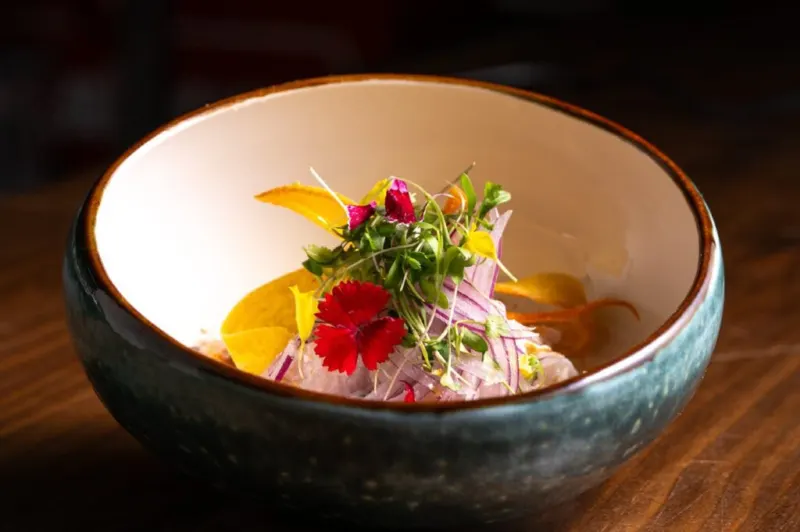
Microgreens entered the kitchen through the door of fine dining. According to the USDA, they appeared on chefs' menus in San Francisco as early as the 1980s. The reason is simple: in very little space they bring intense flavour, colour and texture. Today they are just as easy to use at home. You just need to know which variety goes where.
The flavour groups
| Group | Varieties | Pair with |
|---|---|---|
| Hot, peppery | Radish, arugula, mustard | Rich meats, burgers, tacos, eggs, sushi |
| Mild, fresh | Broccoli, kohlrabi, red cabbage | Salads, sandwiches, smoothies, almost anything |
| Sweet, filling | Pea, sunflower, milk thistle | Salad bases, bowls, wraps, stir-fries |
| Herby | Basil, coriander, carrot | Pasta, tomato, fish, Asian and Mexican dishes |
| Colourful, mild | Amaranth, beet | Garnish on pale dishes, desserts |
| Earthy | Spinach, wheatgrass (for juice) | Smoothies, omelettes, pizza |
Pairings that work
- Feta, watermelon and radish: peppery radish balances the sweetness and saltiness.
- Beet, goat's cheese and walnuts: beet microgreens tie in with roast beetroot.
- Pea, mint and lemon: as a salad or on top of a pea risotto.
- Sunflower and avocado: crunchy on creamy, on toast or in a bowl.
- Red cabbage and apple: in a salad with white cheese or in coleslaw.
- Amaranth on hummus: red on beige looks striking, without changing the flavour.
Techniques from professional kitchens
- At the end, not in the pan. Microgreens go on the plate just before serving. Heat wilts them within seconds.
- Light dressing, separately. In a salad, toss the sturdier ingredients with the dressing first and put the microgreens on top, or coat them lightly with your fingers. Heavy dressing flattens them.
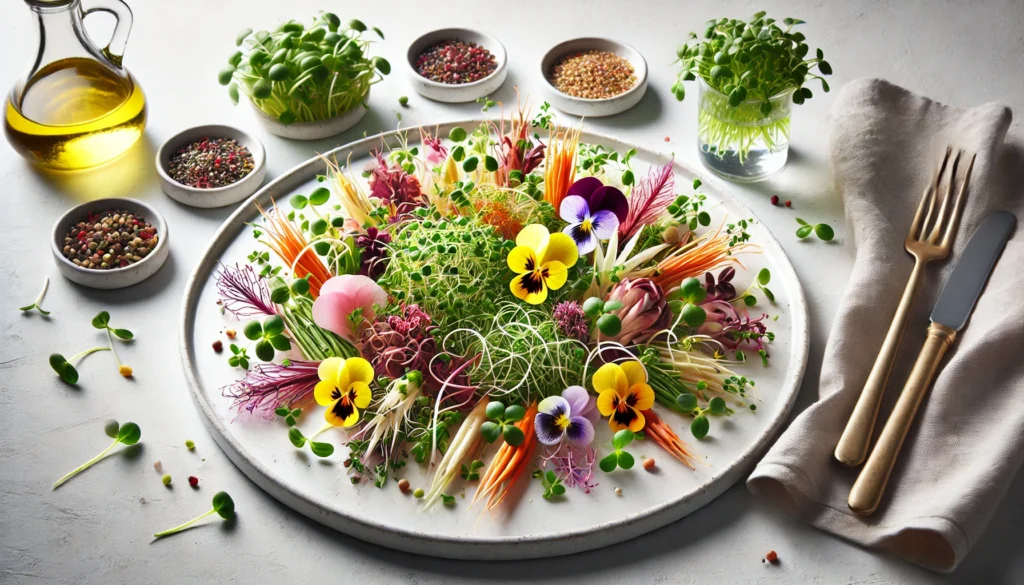
- Tweezers for garnish. A small tuft in the centre of the plate or along a fillet looks more deliberate than scattered leaves.
- Dry. If you rinse them, dry them well in a salad spinner or on paper. Water dilutes the flavour and makes them wilt.
- Colour contrast. Purple and red varieties on pale food, green ones on dark or red food such as tomato and beetroot.
Can they be cooked?
Most cannot, because they are too delicate. Pea is the exception: stir-fried for 30–60 seconds with garlic, it is a classic of Chinese cooking. Microgreens also go into pesto, green sauces and smoothies. Remember that vitamin C is lost with heat, so raw gives more nutrients.
Keeping them fresh for serving
In the fridge, dry, in a container with kitchen paper. Take them out just before you need them. If they wilt slightly, a few minutes in very cold water often revives them. Then dry them well. More in the storage guide.
Sources
- USDA Agricultural Research Service, Specialty Greens Pack a Nutritional Punch (2014).
- Utah State University Extension, Grow Your Own Microgreens (flavour by variety).