
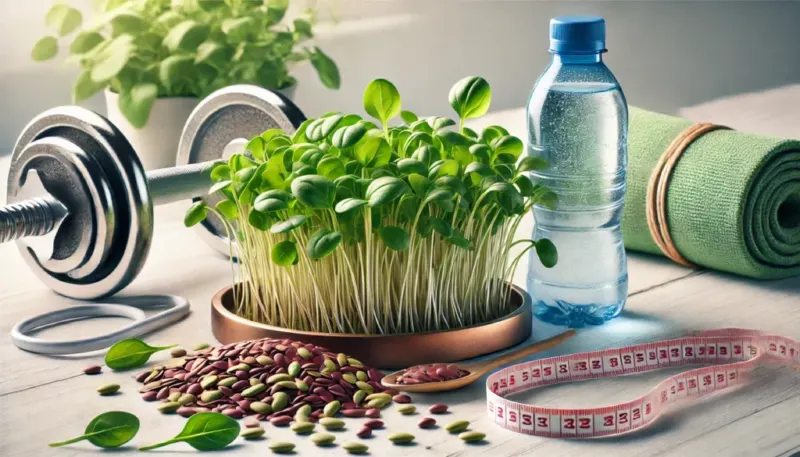
You will often read that microgreens "increase endurance", "speed up recovery" or "hydrate". The honest answer is that there are no studies looking at microgreens and athletic performance. That does not mean they have no place in an athlete's diet. It means their place is that of a good vegetable, not a supplement.
What really matters for performance
Performance and recovery depend mainly on the basics: enough energy, carbohydrate for glycogen stores, protein for muscle, fluids and sleep. Fruit and vegetables round this out with vitamins, minerals and plant compounds. Microgreens belong in that group: they add nutrients and variety, but do not replace any of the basics.
Nutrients athletes care about
- Iron: needed to carry oxygen in the blood, and deficiency is common in female and endurance athletes. Microgreens contain small amounts (e.g. 0.75 mg/100 g in kohlrabi), but their vitamin C helps absorb iron from other plant foods in the meal.
- Potassium: an important electrolyte, and the most abundant mineral in microgreens according to the USDA. For replacement after hard exercise, though, fluids and sodium matter far more.
- Vitamin C and antioxidants: essential for normal body function. There is no evidence that larger amounts from food improve recovery.
What is true about beetroot and nitrates
There is one area where vegetables and performance have been studied seriously: beetroot juice. It is rich in nitrates, which the body converts into nitric oxide. A 2017 systematic review found that it can improve cardiorespiratory endurance. But that applies to specific, large doses of nitrate from concentrated juice. It does not automatically apply to beet microgreens, which have not been studied for this and are eaten in small amounts.
Practical ideas
Before training
- Wholegrain toast with egg or cottage cheese and a handful of broccoli or pea microgreens.
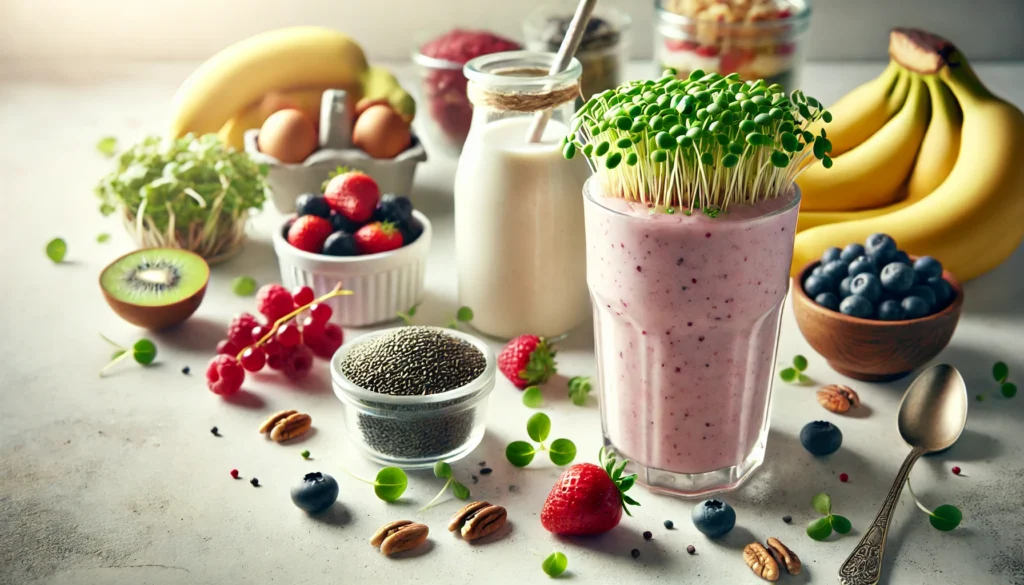
- A smoothie with banana, yoghurt, oats and spinach or broccoli microgreens.
After training
- A bowl of rice or quinoa, chicken, fish or pulses, vegetables and a generous layer of sunflower.
- A lentil salad with red cabbage, peppers and lemon, for iron together with vitamin C.
- A wrap with eggs or turkey, avocado and microgreens.
The bottom line
Microgreens are a tasty, nutritious addition to an athlete's meals, like any vegetable. They are not a performance supplement. If you want a personalised nutrition plan for your sport, a dietitian specialising in sports nutrition is the best choice.
Sources
- Domínguez R, Cuenca E, Maté-Muñoz JL, et al. Effects of Beetroot Juice Supplementation on Cardiorespiratory Endurance in Athletes. A Systematic Review. Nutrients, 2017; 9(1): 43.
- USDA Agricultural Research Service, Which Minerals Are in Microgreens? (2017).
- Kaya S, Yardımcı H. Microgreens: nutritional properties, health benefits, production techniques, and food safety risks. PeerJ, 2025.