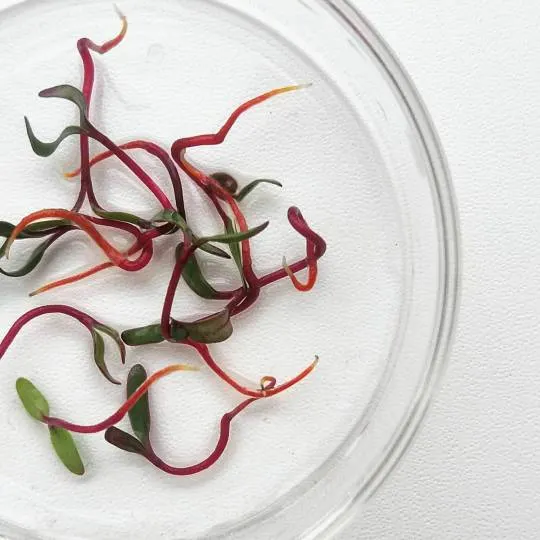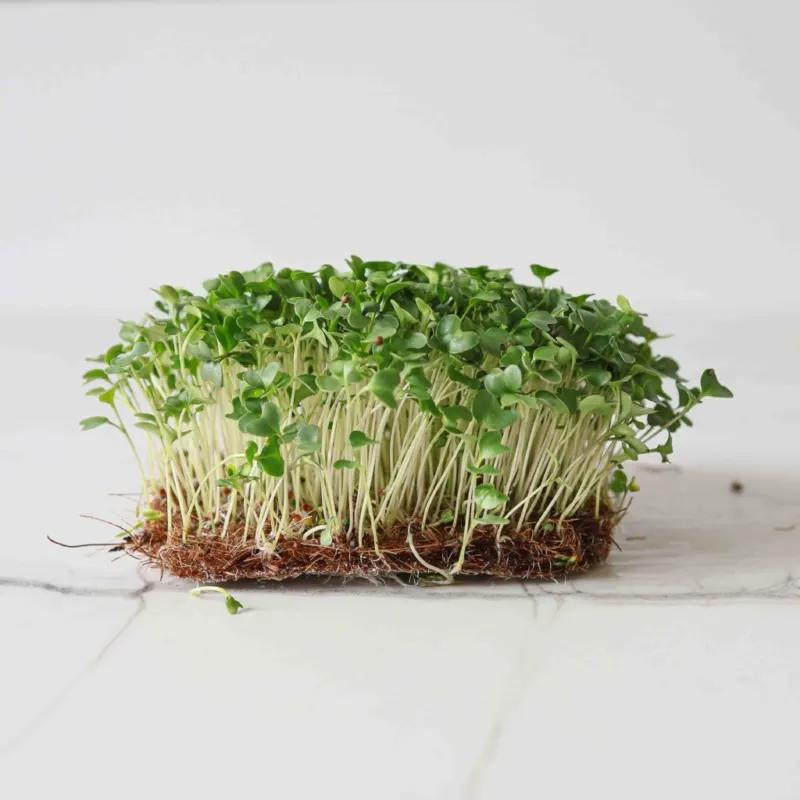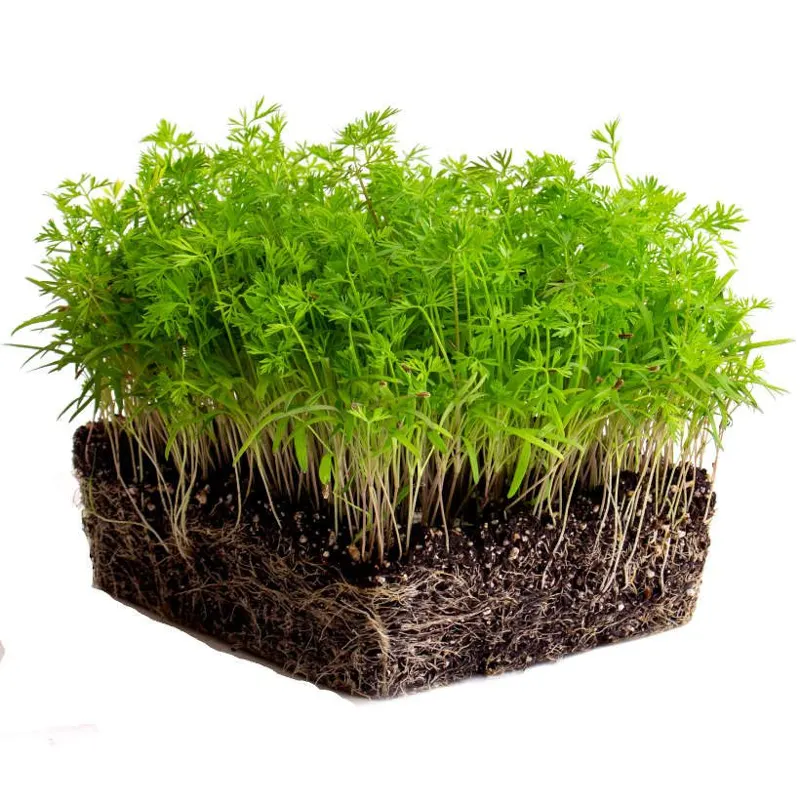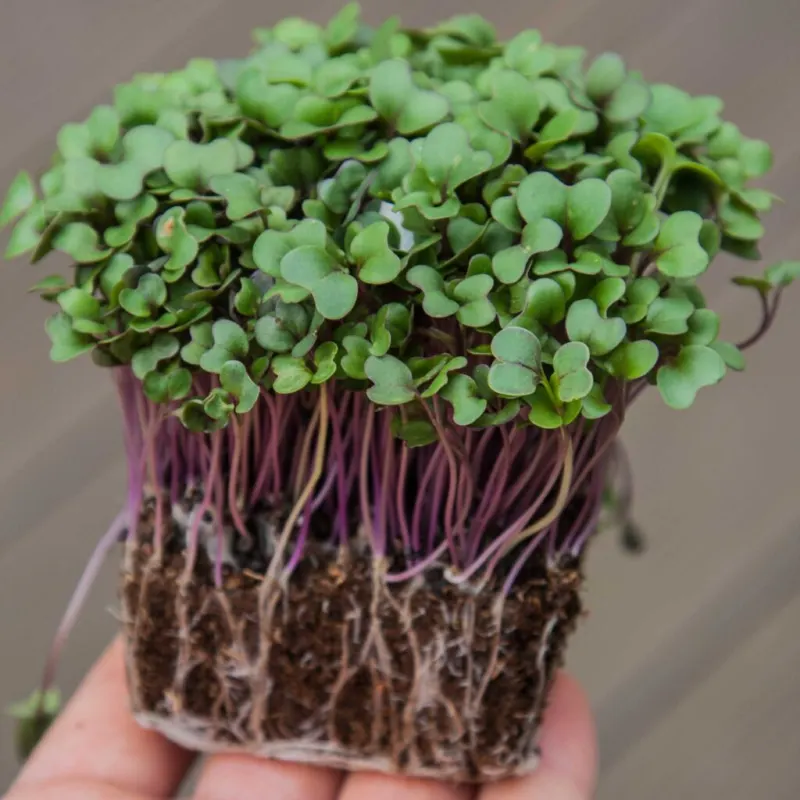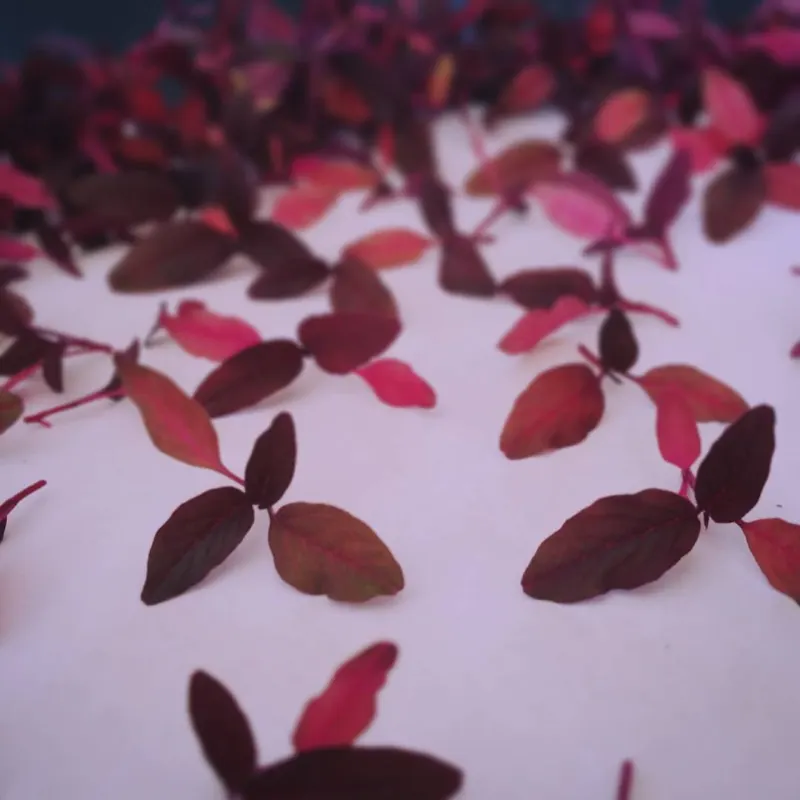
Few microgreens are as striking as amaranth. Red varieties produce thin stems and small leaves in shades from deep red to magenta that look almost painted. Their flavour is mild and slightly earthy, without the peppery bite of the brassicas. That is why chefs love them: they add colour to a dish without changing its taste.
At a glance
| Botanical name | Amaranthus spp. (usually red varieties such as 'Garnet Red') |
|---|---|
| Family | Amaranth family (Amaranthaceae) |
| Flavour | Mild, slightly earthy |
| Colour | Red to magenta |
| Presoak | Usually not (the seed is very small) |
| Harvest | About 2–3 weeks, depending on variety and temperature |
| Difficulty | Moderate (slow, and sensitive to overwatering) |
The vitamin K
In the major USDA study of 25 microgreens, garnet amaranth had the highest concentration of vitamin K1 (phylloquinone) of all. Vitamin K is needed for normal blood clotting and for bones, and green leafy vegetables are among its best sources.
Another study, summarised in a 2025 review, also found that microgreens of one amaranth species contained more protein, manganese and zinc than the mature leaves of the same plant. The red colour comes from pigments called betalains. Research shows that blue light during growing increases them.
Growing
Amaranth is one of the slower and more delicate microgreens, but its colour is worth the effort.
- Sow: the seed is tiny, so most growers sow it dry, thinly and evenly on a fine, moist medium. The University of Illinois lists it among the slower seeds to germinate.
- Warmth: it likes heat. In a cool house it germinates slowly and unevenly, while at around 22–24 °C it does better.
- Darkness: a few days, with a very light weight or none, because the seedlings are thin.
- Light: the stronger, the deeper the red. With little light the plants stay pale.
- Watering: carefully, from below. The thin stems rot easily at the base if the medium stays soggy.
- Harvest: when the plants are a few centimetres tall and the cotyledons have opened, usually in 2–3 weeks. Sources vary widely (from 8 to 25 days), because timing depends heavily on variety and temperature.
See also the growing guide and what to do when seedlings collapse at the base.
In the kitchen
- Garnish: the most common use. A small tuft on risotto, fish, hummus or a creamy soup completely changes how the dish looks.
- Salads: mixed with green microgreens for colour contrast.
- Desserts: their mild flavour means they work on fruit or yoghurt desserts, too.
They are very delicate: add them last and do not toss them with heavy sauces.
Sources
- Xiao Z, Lester GE, Luo Y, Wang Q. Assessment of vitamin and carotenoid concentrations of emerging food products: edible microgreens. Journal of Agricultural and Food Chemistry, 2012; 60(31): 7644–7651.
- Kaya S, Yardımcı H. Microgreens: nutritional properties, health benefits, production techniques, and food safety risks. PeerJ, 2025.
- University of Illinois Extension, Microgreens tip sheet (PDF).
Photo: Matthieu Bonneau, Wikimedia Commons, CC0.