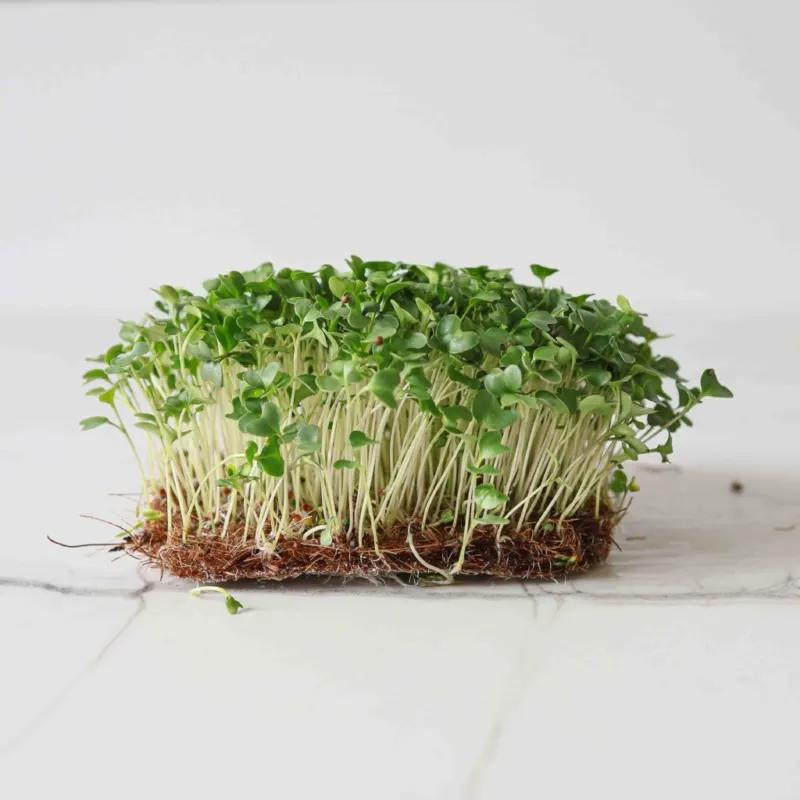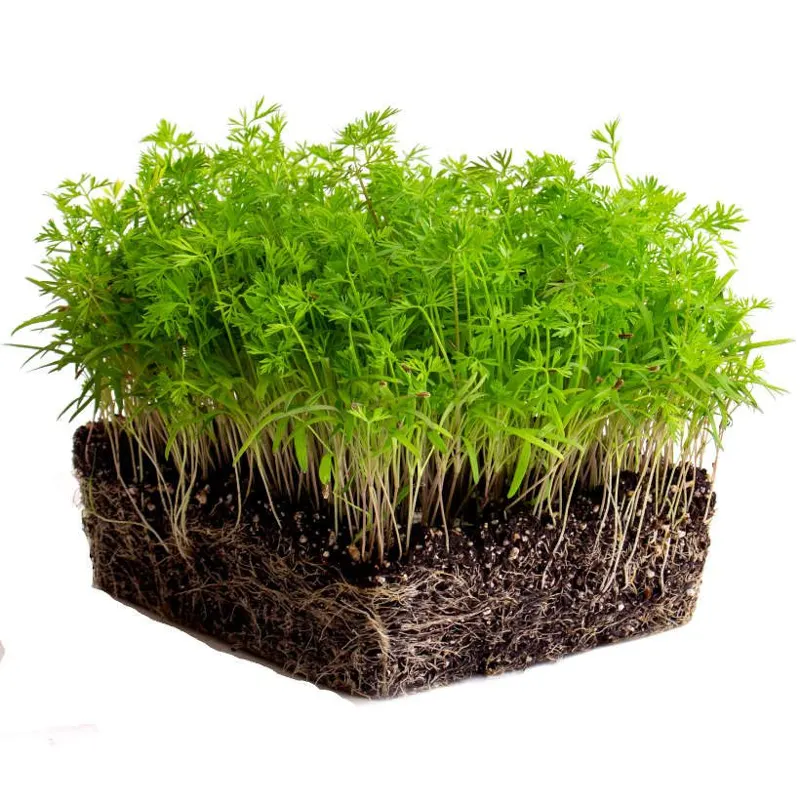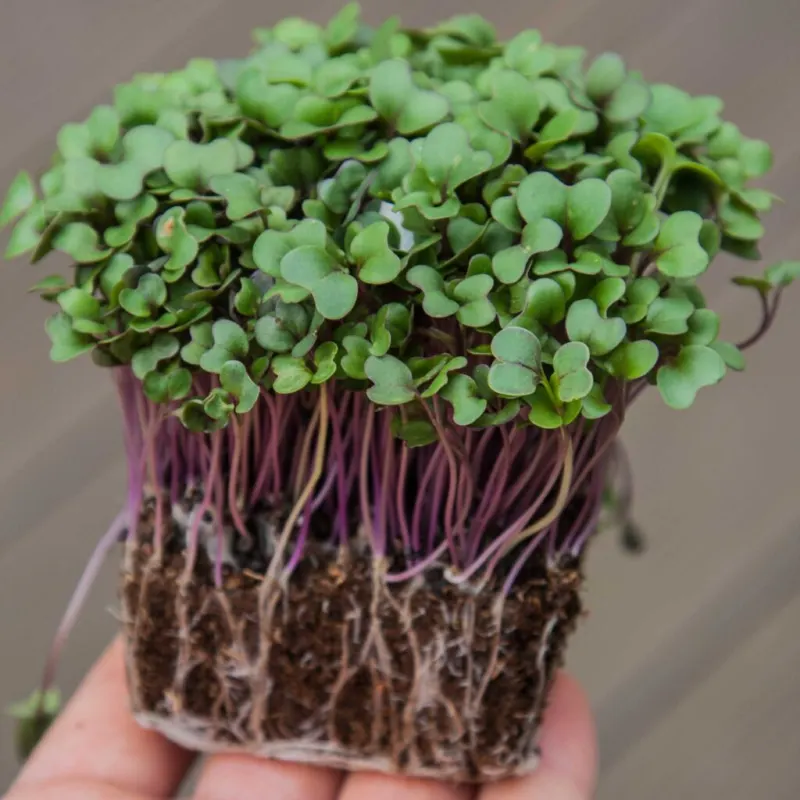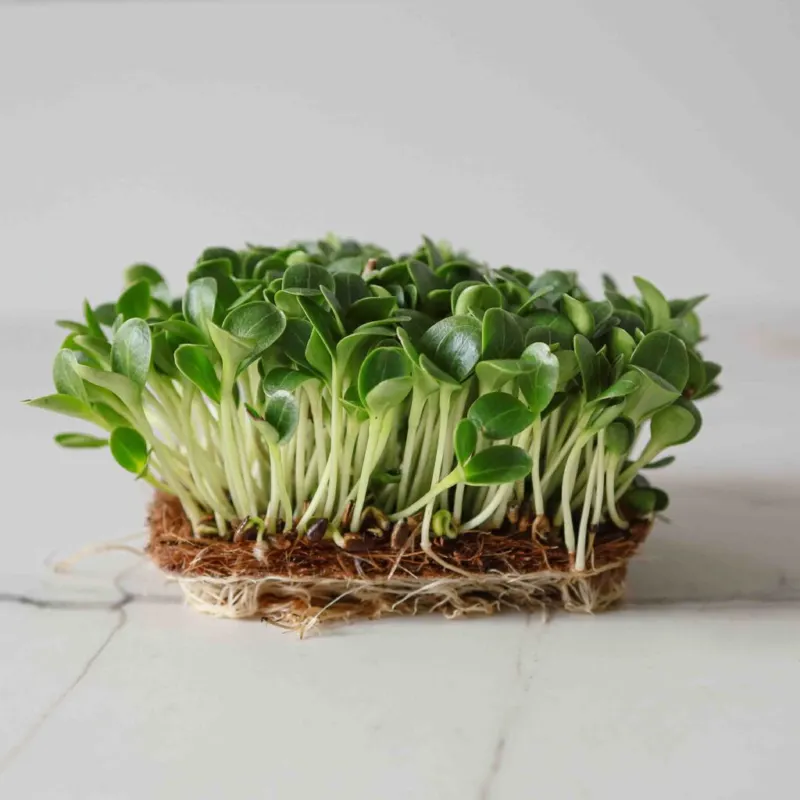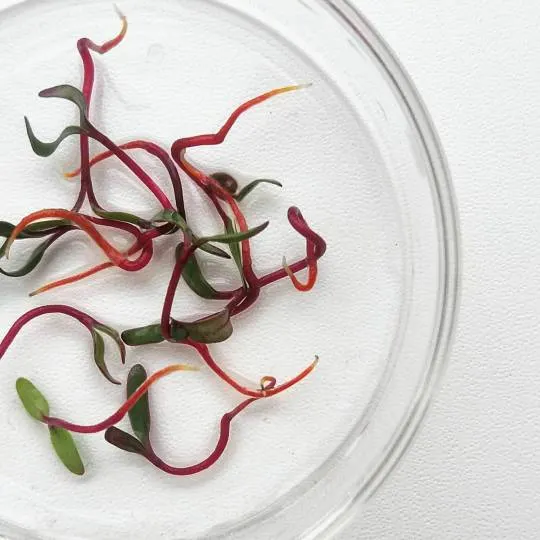
Beet microgreens have thin, vivid red stems and green leaves, often with red veins. Their flavour recalls beetroot itself: sweet and earthy, but much milder. They are one of the slower microgreens and need a little patience, but few varieties bring so much colour to a plate.
At a glance
| Botanical name | Beta vulgaris |
|---|---|
| Family | Amaranth family (Amaranthaceae) |
| Flavour | Sweet, earthy, like mild beetroot |
| Colour | Red stems, green leaves |
| Presoak | Recommended, a few hours |
| Harvest | About 2–3 weeks |
| Difficulty | Moderate (slow germination, stuck seed coats) |
A "seed" that is several seeds
What we buy as beet seed is actually a small, hard, corky cluster that usually holds two to four seeds. That is why one "seed" can produce several seedlings, and why beet germinates slowly and unevenly if you do not soak it.
Growing
- Soak: a few hours in water. The University of Illinois lists beet among the slower seeds to germinate and suggests soaking that group for 6 to 24 hours.
- Sow: thickly, in a single layer, on a moist medium. Because each "seed" produces several plants, do not sow too densely.
- Darkness with weight: about 3–5 days. The weight helps the plants leave the hard seed coats behind, which otherwise stay stuck on the leaves.
- Light: the more light, the deeper the red of the stems.
- Harvest: usually in 2–3 weeks, once the cotyledons have opened. Cut a little lower than with other varieties to keep as much red stem as possible.
Any seed coats left come off when you rinse them. See also the growing guide and the common problems.
Nutrition
Reliable published data specifically on beet microgreens are limited, so we do not give per-100 g figures here. As with amaranth, their red colour comes from betalains, the same pigments that colour beetroot. For the general picture, see our guide to what the research says about nutrition.
In the kitchen
- Salads: they pair naturally with goat's cheese or feta, walnuts and orange, just like mature beetroot.
- Garnish: on creamy soups, risotto, fish or eggs.
- Bruschetta and toast: with cream cheese or avocado.
- Bowls: for colour in grain and bean bowls.
Sources
- University of Illinois Extension, Microgreens tip sheet (PDF).
- Utah State University Extension, Grow Your Own Microgreens.
- Kaya S, Yardımcı H. Microgreens: nutritional properties, health benefits, production techniques, and food safety risks. PeerJ, 2025.
Photo: Katygreen4, Wikimedia Commons, CC BY 4.0.