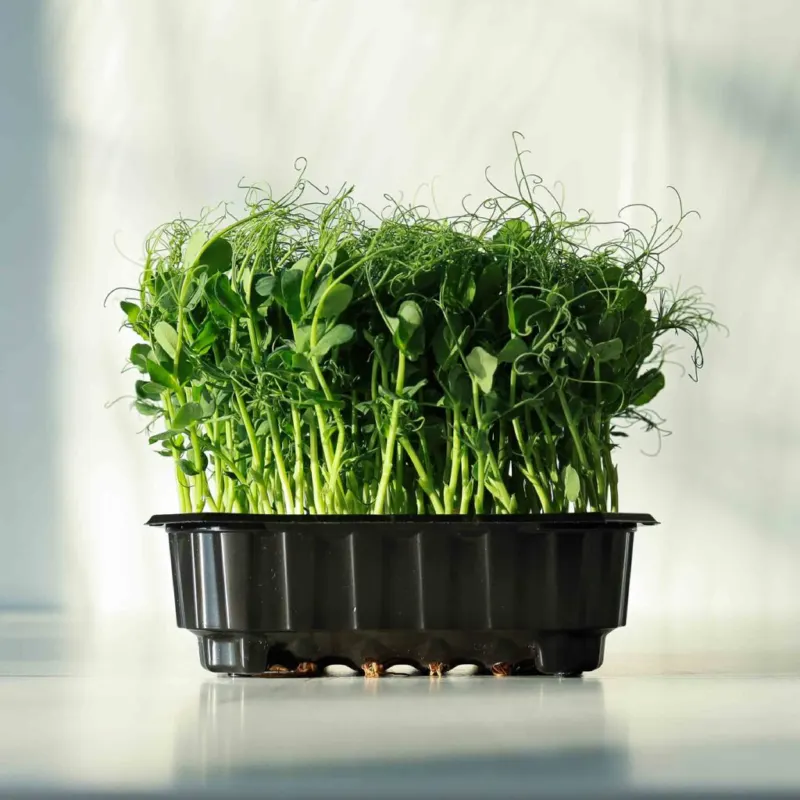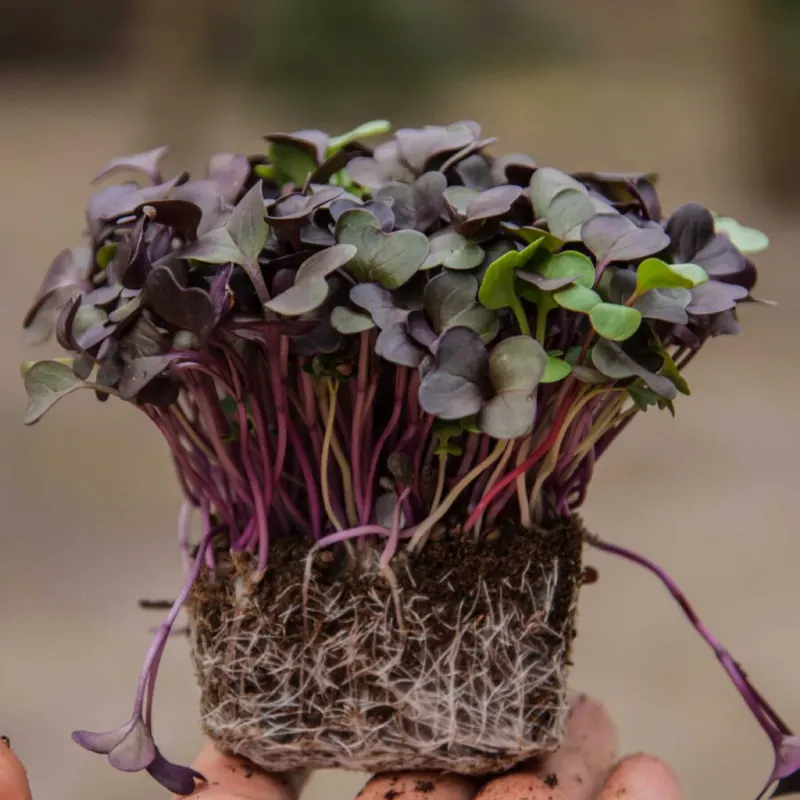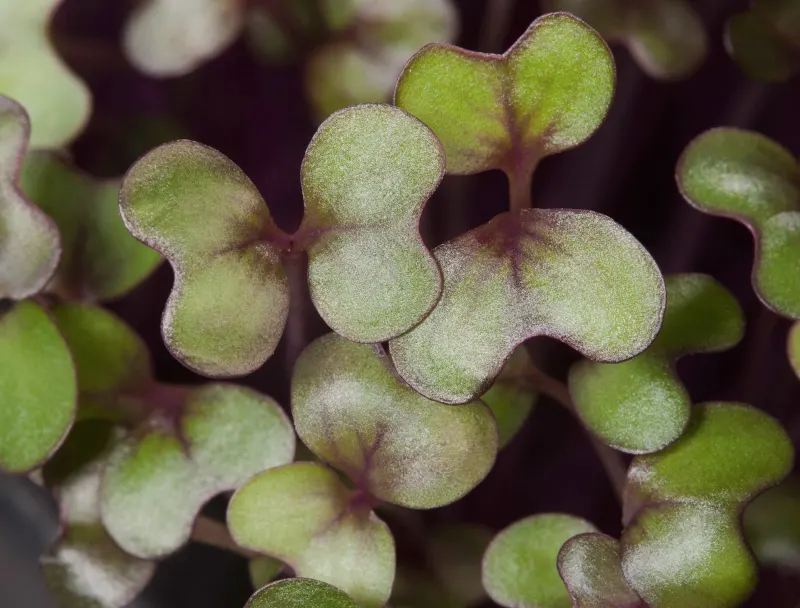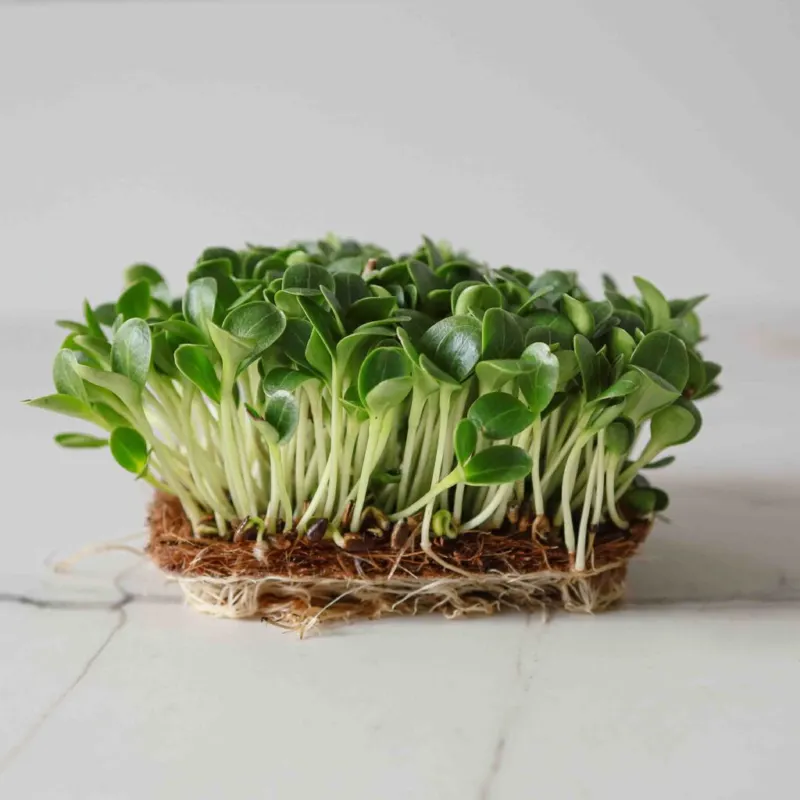
Milk thistle (Silybum marianum) is known mainly as a herb: its seeds have been used for centuries in folk medicine and today in liver supplements. As a microgreen it is something much simpler: a vegetable with thick, fleshy cotyledons, a crunchy texture and a mild, slightly sweet flavour that is a little reminiscent of cucumber.
At a glance
| Botanical name | Silybum marianum |
|---|---|
| Family | Daisy family (Asteraceae) |
| Flavour | Mild, slightly sweet |
| Texture | Fleshy, crunchy |
| Presoak | Helps, a few hours |
| Harvest | Usually 10–14 days, before true leaves appear |
| Difficulty | Easy to moderate |
Why it is cut early
Mature milk thistle has large leaves with white "marbled" veins and sharp spines along the edges. The first true leaves start forming spines very early. That is why milk thistle microgreens are cut at the cotyledon stage, before the true leaves develop. If you see leaves with toothed, spiny edges in your tray, you have left it too late.
Growing
- Soak: the seeds are large and hard. A few hours in water help them germinate evenly.
- Sow: thickly, in a single layer, on a moist medium.
- Darkness with weight: a few days, as with sunflower, for sturdy stems and to shed the seed coats.
- Light and water: plenty of light, watering from below.
- Harvest: once the cotyledons have fully opened, usually in 10–14 days.
See the growing guide and the common problems.
What is true about silymarin
Milk thistle is known for silymarin, a mixture of plant compounds studied for the liver. Silymarin, though, is found mainly in the plant's seeds (fruits), from which supplements are made. There are no reliable data on how much silymarin the microgreens contain, nor studies showing they have the same effects. Even for the supplements, according to the US National Institutes of Health (NIH), clinical trials for liver conditions have given conflicting or very limited results.
In other words: enjoy milk thistle microgreens for their flavour and texture, like any vegetable, but do not treat them as a substitute for a supplement or a treatment for the liver. For what we know about microgreens in general, see our guide to what the research says.
In the kitchen
- Salads: the fleshy cotyledons add bulk and crunch.
- Sandwiches and wraps: like sunflower, in place of lettuce.
- Bowls and tabbouleh: with cucumber, tomato and lemon.
- Snack: on their own, with a little salt.
Sources
- National Center for Complementary and Integrative Health (NIH), Milk Thistle.
- Penn State Extension, The ABCs of Microgreens.