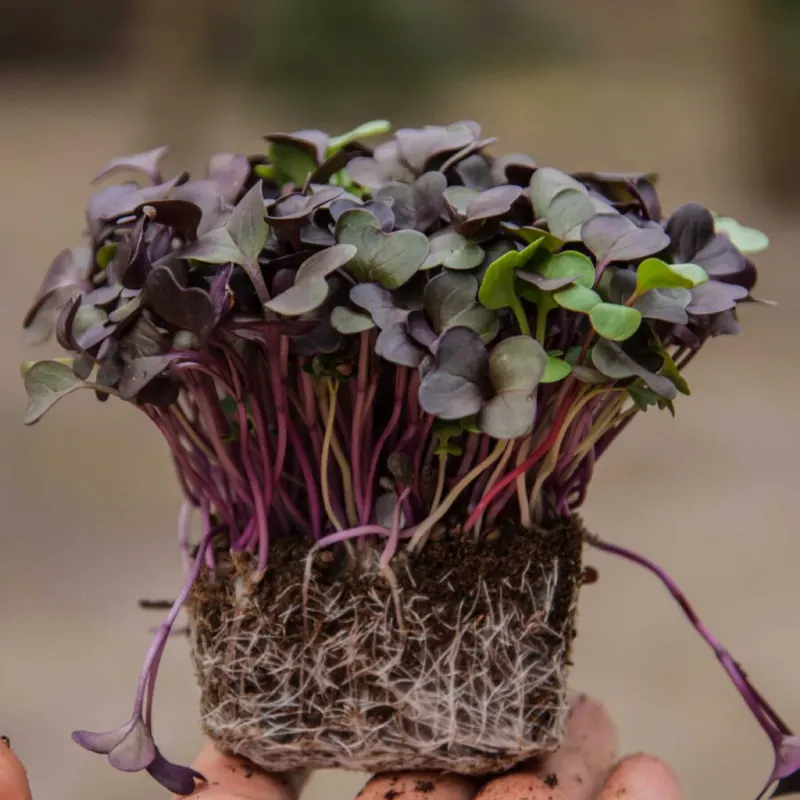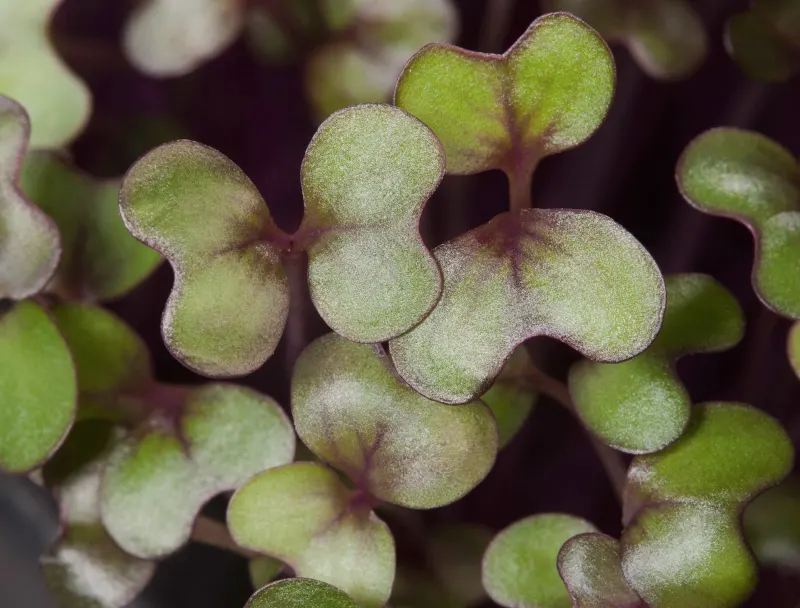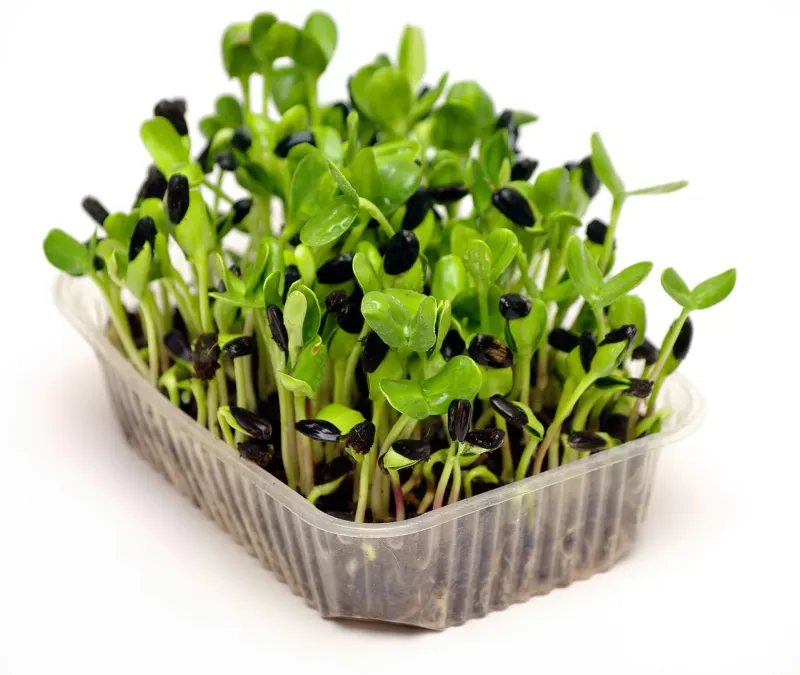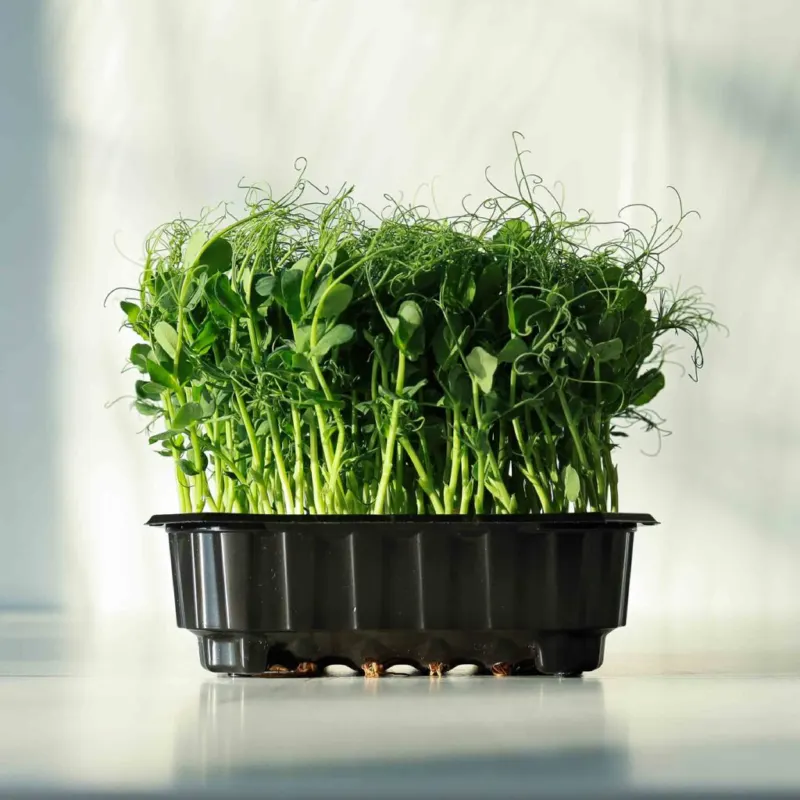
Pea microgreens, also known as pea shoots, are among the most loved, even by people who are not keen on "greens". They have crunchy, juicy stems, tender leaves and, depending on the variety, small tendrils. Their flavour is sweet and recalls fresh peas straight from the pod. They work both as a salad base and hot, for a few seconds in the pan.
The variety in the photo is a leafless (afila) type that grows lots of tendrils instead of leaves. There are also leafier varieties: the flavour is similar, but the look and texture differ.
At a glance
| Botanical name | Pisum sativum |
|---|---|
| Family | Legume family (Fabaceae) |
| Flavour | Sweet, fresh pea |
| Texture | Crunchy, juicy |
| Presoak | About 6 hours |
| Days in the dark | About 3 |
| Harvest | 8–10 days |
| Seed per 25×50 cm tray | About 150 g |
| Difficulty | Easy |
Growing
- Soak: about 6 hours in cool water. The seeds swell noticeably.
- Sow: thickly, in a single layer. Peas need far more seed by weight than small-seeded varieties, because each seed is large.
- Darkness with weight: about 3 days. The weight makes the shoots sturdier and straighter.
- Light: once uncovered they green up quickly. With little light they grow tall, thin and leaning.
- Harvest: in 8–10 days, at about 8–12 cm tall. Cut above the first node (the first "joint" on the stem) if you want a second cut.
Pea is one of the few microgreens that often gives a second, smaller cut, because it sends up new shoots from the nodes below where you cut. See the full growing guide.
Nutrition
Pea is a legume, and its young plants are more filling than most microgreens. Reliable published data with precise values for pea microgreens are limited, though. So we do not give per-100 g figures, and we suggest caution with tables circulating without a source. For the general picture, see our guide to what the research says.
In the kitchen
- Salads: as a base, with feta, mint and lemon.
- Stir-fried: 30–60 seconds in a hot pan with garlic and a little soy sauce or lemon. This is the classic use in Chinese cooking.
- Pasta and risotto: stirred in at the end, with peas and parmesan.
- Smoothies and pesto: in place of basil or spinach.
- Snack: on their own, straight from the tray.
What to watch for
Use pea seed sold for eating or for microgreens, not garden seed, which is often coated with fungicide. Pea microgreens have nothing to do with ornamental sweet pea (Lathyrus odoratus), which is toxic: make sure you are buying Pisum sativum.
Sources
- Utah State University Extension, Grow Your Own Microgreens (seed amount, soaking, days in the dark and to harvest).
- Penn State Extension, The ABCs of Microgreens.