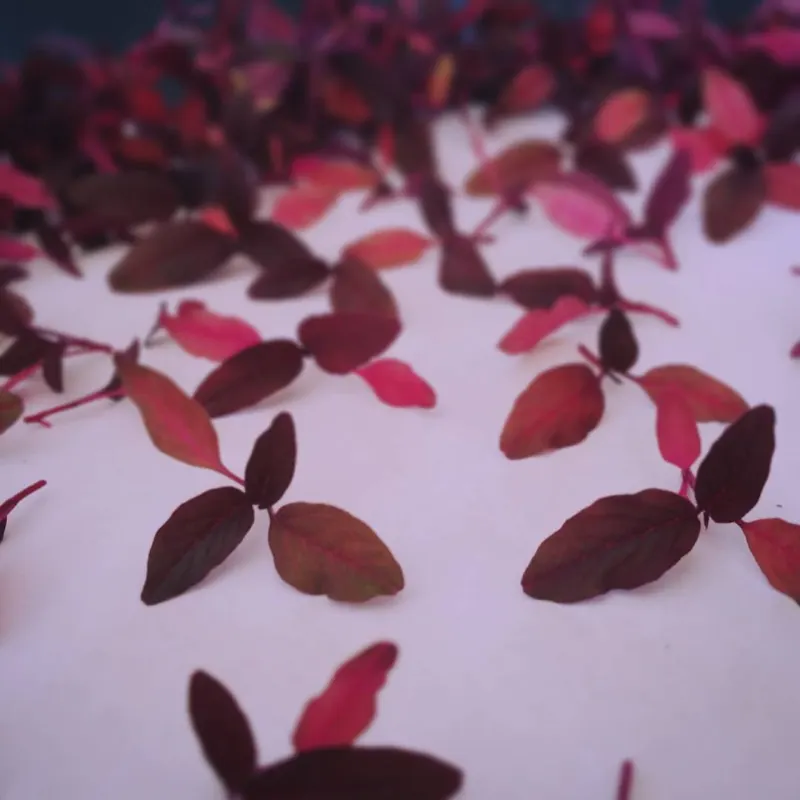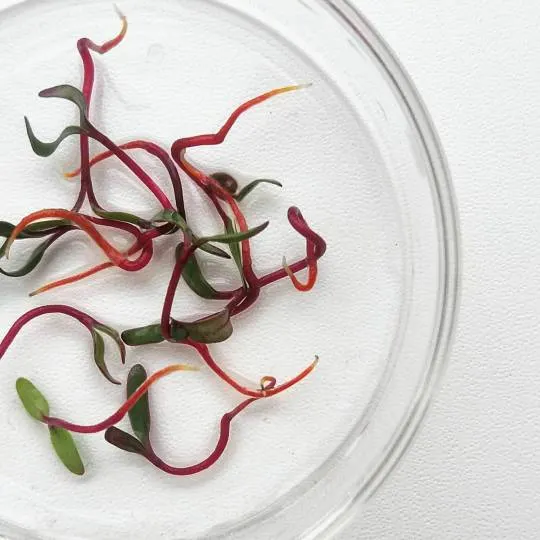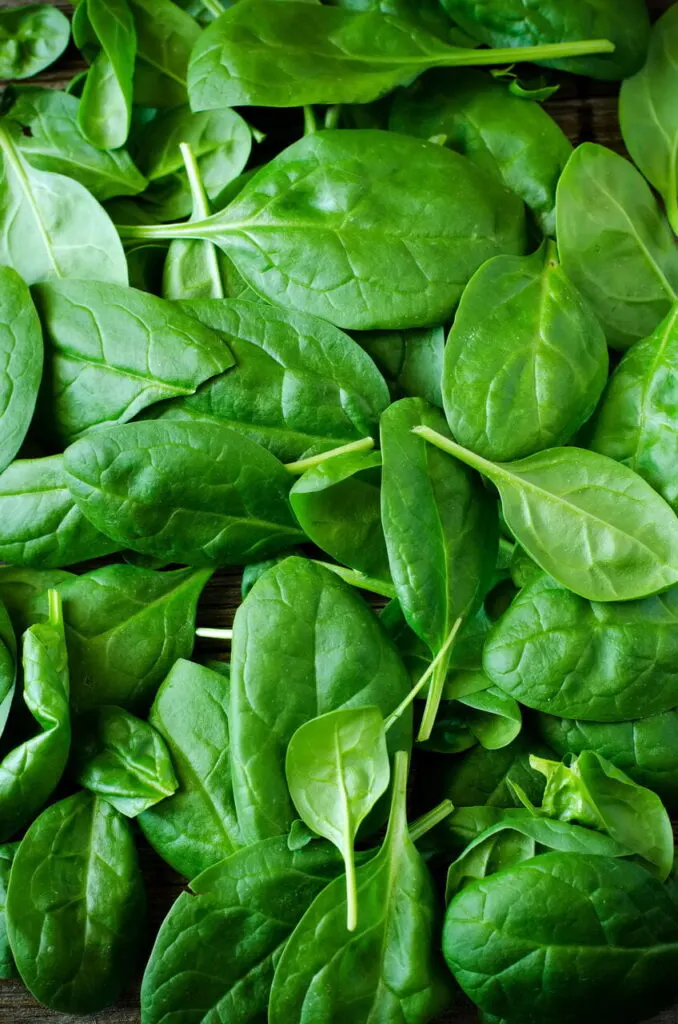
Spinach microgreens have thin, often reddish stems and narrow, tender leaves with a mild, sweet spinach flavour, without the metallic aftertaste the mature leaf sometimes has. Lorelay is a smooth-leaved spinach variety that is also grown for baby leaf. Spinach is one of the more demanding microgreens, though, and it is worth knowing why before you start.
At a glance
| Botanical name | Spinacia oleracea |
|---|---|
| Family | Amaranth family (Amaranthaceae) |
| Flavour | Mild, sweet, spinach |
| Presoak | Optional, a few hours |
| Harvest | About 2–3 weeks |
| Difficulty | Hard (slow germination, sensitive to heat and overwatering) |
Why it is difficult
- It germinates slowly and unevenly. The University of Illinois lists it among the slower seeds to germinate.
- It dislikes heat. Spinach is a cool-weather plant. In a warm flat, especially in summer, it germinates poorly.
- It rots easily at the base. Its thin stems are vulnerable to damping off if the medium stays soggy and the air does not move.
Growing
- Season: best in autumn, winter and spring, in a cool room.
- Soak: a few hours helps it germinate more evenly. The University of Illinois suggests 6–24 hours for slow seeds.
- Sow: a little more thinly than brassicas, for better airflow between plants.
- Darkness: a few days, until most of the seeds have germinated.
- Watering: sparingly and from below. This is the most important point.
- Harvest: usually in 2–3 weeks, when the narrow cotyledons are a few centimetres long.
If you are a beginner, start with an easier variety such as radish or broccoli, and try spinach later. See also the growing guide and what to do when seedlings collapse at the base.
Nutrition
Mature spinach is known for its vitamin K, folate and carotenoids. Reliable published data specifically on spinach microgreens are more limited, so we do not give per-100 g figures. For the general picture, see our guide to what the research says.
In the kitchen
- Salads: as a mild base, with strawberries, walnuts and goat's cheese, or with orange.
- Smoothies: the "quietest" green for smoothies, as it barely changes the flavour.
- On hot dishes: on omelettes, pizza or pasta, just before serving, because heat wilts them instantly.
Sources
- University of Illinois Extension, Microgreens tip sheet (PDF).
- Penn State Extension, The ABCs of Microgreens.